Oakland, May 10, 2026, 08:03 (PDT)
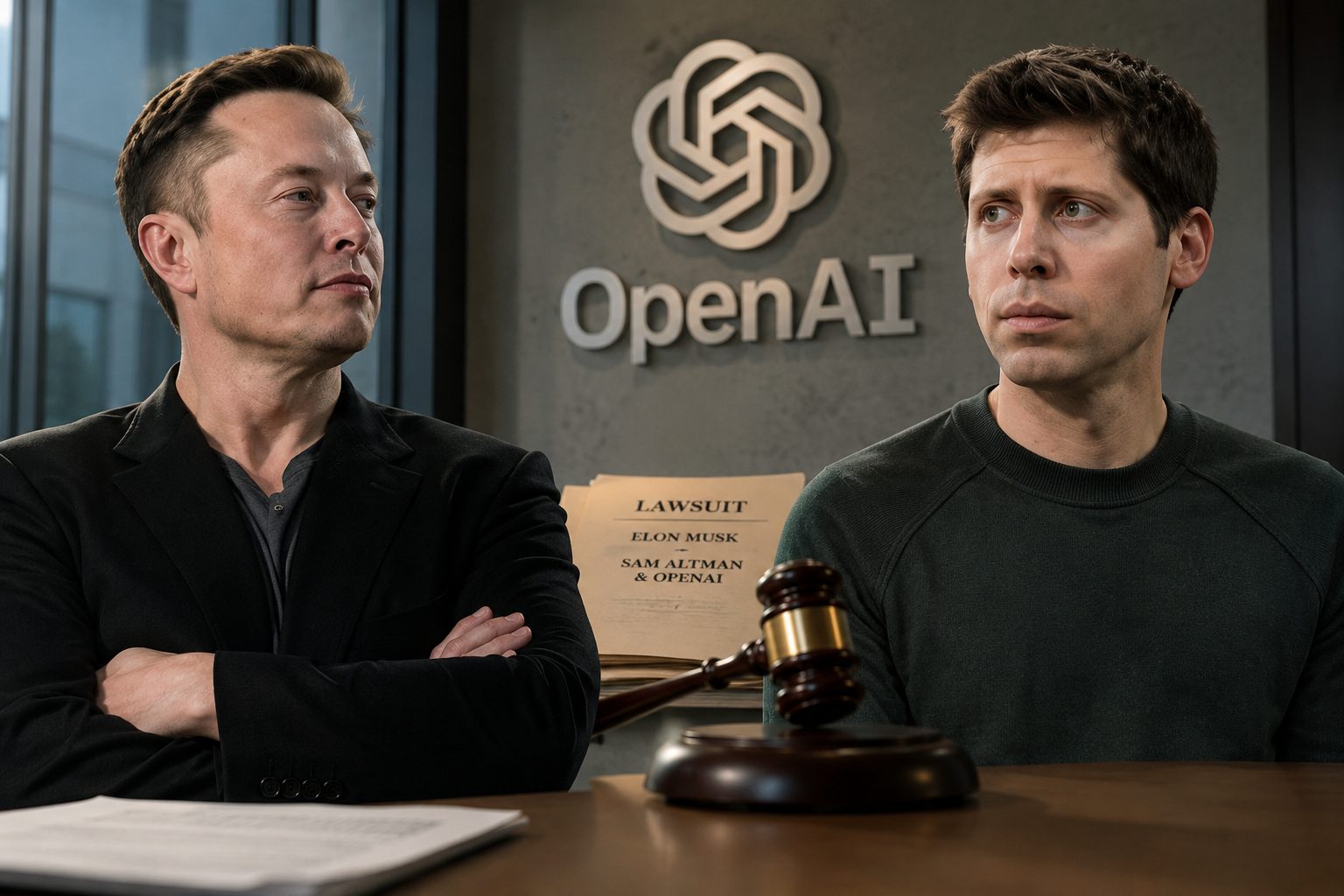
Greg Brockman’s private journal has surfaced as a central exhibit in Elon Musk’s lawsuit against OpenAI, thrusting the ChatGPT maker’s early nonprofit pledges into a courtroom dispute over cash, power, and credibility. According to the Wall Street Journal, Brockman—the OpenAI president—kept years of personal notes, which are now in play as the case scrutinizes what he and Chief Executive Sam Altman had in mind as OpenAI pivoted toward a for-profit structure.
The timing is notable: as OpenAI’s founders argue over its early days, ChatGPT is weaving itself into daily routines for a younger crowd. According to Fortune, Altman said people in their 20s and 30s now treat ChatGPT like a “life advisor.” College students, he added, see it almost as an “operating system.” Some, he said, won’t make major choices without consulting the tool first. Fortune
Scale amplifies the risks. Back in March, OpenAI announced a $122 billion raise, pushing its post-money valuation to $852 billion. That figure turns any governance shakeup into something far weightier than a battle among founders.
Musk says OpenAI abandoned its founding goal—a nonprofit dedicated to building safe AI for everyone—and claims company insiders benefited financially from his backing. OpenAI counters that Musk walked away when he couldn’t take charge. U.S. District Judge Yvonne Gonzalez Rogers has steered the Oakland trial toward the company’s actions, not sweeping debates over AI catastrophe.
The use of diary evidence has added a personal layer to the proceedings. Kicking off the trial’s second week, Musk’s legal team zeroed in on Brockman’s journal entries, claiming those notes backed up their position: that Brockman and Altman misrepresented their commitment to keeping OpenAI a nonprofit. On the stand, Brockman countered. He insisted that OpenAI’s mission — building artificial general intelligence for the benefit of humanity, spanning a wide array of complex tasks — is unchanged.
Brockman hasn’t shied away from questioning Musk’s understanding of AI, either. In testimony covered by TechCrunch, he said Musk “did not and does not know AI.” OpenAI’s co-founders, according to Brockman, were concerned that Musk wouldn’t have the patience needed to lead the company, especially after he rejected an early version—one that ultimately helped shape ChatGPT. TechCrunch
According to Bloomberg, one split surfaced back in January 2018, when Brockman pushed back against Musk’s idea to merge OpenAI with Tesla. In a memo, Brockman insisted OpenAI’s “moral high ground” was its strongest asset and that the organization owed its efforts to humanity, Bloomberg reported. Bloomberg
Microsoft has played a central role in that story. Back in 2018, according to Wired, the company’s executives weren’t sure about OpenAI—but they also feared that stepping back might drive the lab into Amazon’s arms. About a year and a half later, after OpenAI set up a for-profit subsidiary, Microsoft put up $1 billion.
Competitive dynamics are shifting quickly. Anthropic, a key OpenAI competitor, is considering a fresh funding round that may push its valuation close to $1 trillion—potentially overtaking OpenAI, according to Reuters on Friday. Reuters also said Anthropic has pledged to spend $200 billion over five years with Google Cloud.
Musk’s xAI stands to gain more than just bragging rights if the case goes his way. Reuters reported this week that a win for Musk could put the brakes on a key rival’s commercial plans—OpenAI, which competes directly with xAI, now folded into SpaceX.
The risk to OpenAI stands out. According to the Financial Times, if Musk wins in court, Judge Rogers could push OpenAI back to nonprofit status—a blow to any IPO ambitions. Musk wants $150 billion in damages and is also calling for Altman and Brockman to be ousted, the FT reported.
Some governance skeptics see the trial as a rebuke to the notion that just a few tech founders get to chart AI’s future. “It highlights the risks of trusting CEOs to act responsibly with tech that’s this lucrative,” Sarah Myers West, co-executive director at the AI Now Institute, told Reuters. Reuters
This phase will show if damaging documents and founder testimony actually count as legal evidence. Reuters says the trial kicked off April 28, with a verdict possible by mid-May. That timeline keeps the heat on OpenAI, while Altman’s public remarks suggest the product is shifting—moving away from a simple search box, growing into something more habitual.