TEHRAN, May 7, 2026, 23:32 IRST
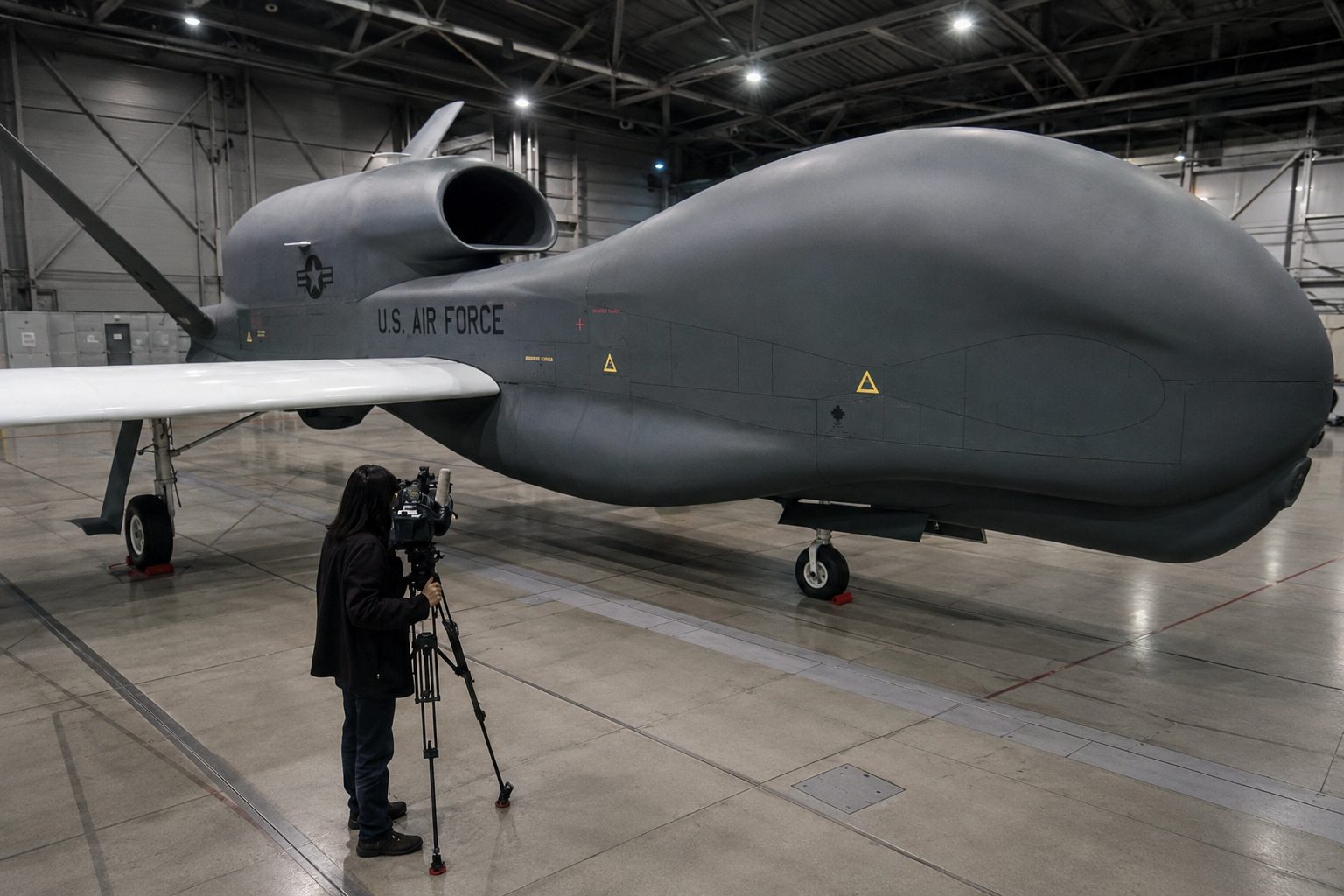
Iran published footage it claims is the downed U.S. reconnaissance drone, debris scattered over the Strait of Hormuz, fueling military tension as Washington and Tehran push for a temporary ceasefire. These surveillance drones typically patrol the region; if Iran’s account holds up, it marks yet another close call above Gulf waters.
Timing is crucial here. According to sources and officials cited by Reuters, U.S. and Iranian sides are working on a temporary deal that could halt the fighting, keep shipping lanes open through Hormuz, and create a 30-day window for broader negotiations. Asked about the chances, U.S. President Donald Trump said a deal is “very possible.” Pakistani mediators, for their part, told reporters they expect an agreement “sooner rather than later.” Reuters
Hormuz remains the key pressure point. Iran is now formalizing oversight of ships in the strait with its newly announced Persian Gulf Strait Authority, Lloyd’s List Intelligence told AP. Shippers, already facing snarled flows of oil, gas, and fertilizer, are watching the move closely.
The Islamic Revolutionary Guard Corps released a video Wednesday, showing people gathered around debris, according to The Independent. Reuters said it had verified where the footage was shot, though the date couldn’t be pinned down. Arun Dawson, a PhD candidate in War Studies at the Freeman Air and Space Institute, told Reuters the object looked like the external fuel tank of a General Atomics MQ-9A ER Reaper—the Predator B drone run by the U.S.
The drone claim followed a string of mysterious incidents inside Iran. Last week, The Times of Israel, referencing semi-official Mehr news agency, noted air-defense sirens echoing in parts of Tehran, though no explanation surfaced. Then on Thursday, Reuters relayed that Iran’s Fars news agency described blast-like noises near Bandar Abbas, but so far, where and why remains a question.
Washington’s Gulf allies have been moving as well. Saudi Arabia and Kuwait rolled back curbs on U.S. military access to bases and airspace—measures put in place after a U.S. push to reopen Hormuz—according to the Wall Street Journal, cited by Reuters. Reuters noted it couldn’t independently confirm the Journal’s report.
Project Freedom—Washington’s naval escort operation for commercial shipping—hangs in the balance. The Trump administration is considering restarting the mission, according to The Times of Israel, which referenced a Wall Street Journal report. Operations paused while Pakistan reportedly mediated talks with Iran. Saudi officials, the report noted, were concerned U.S. forces wouldn’t defend Gulf states if Iran struck back.
Diplomatic efforts are underway, though progress is messy. Washington is pushing for a U.N. Security Council resolution calling on Iran to stop attacks and mining in Hormuz, but diplomats indicated China and Russia would probably veto it. The draft has Bahrain’s backing and is also supported by Saudi Arabia, the United Arab Emirates, Kuwait, and Qatar.
For now, markets seem to be buying into the talks. Brent crude slid roughly 3% to about $98 a barrel on Thursday, following Wednesday’s sharp 8% tumble, according to Reuters, as bets on easing supply risks gained traction. “Thin” is how Takamasa Ikeda, senior portfolio manager at GCI Asset Management, described the proposals, but he noted markets are working off the view that escalation won’t follow. Reuters
The memo may not keep up with events on the ground. That drone footage alone can’t clarify when or why the aircraft went down, and there’s still distance between Washington and Tehran over nuclear programs, missiles, militias, and control of Hormuz shipping lanes. Another downed craft, a mine incident, or a radar slip—any of these could snap the current lull and escalate things fast.