WASHINGTON, May 5, 2026, 08:18 (EDT)
- AI-related investment has moved from a market theme into the U.S. growth debate, after David Sacks said it accounted for 75% of first-quarter GDP growth. ( [1])
- The U.S. economy grew at a 2.0% annual rate in the first quarter, helped by investment even as consumer spending slowed. ( [2])
- U.S. stock-index futures rose before Tuesday’s open as oil eased, but Middle East tensions kept markets fragile. ( [3])
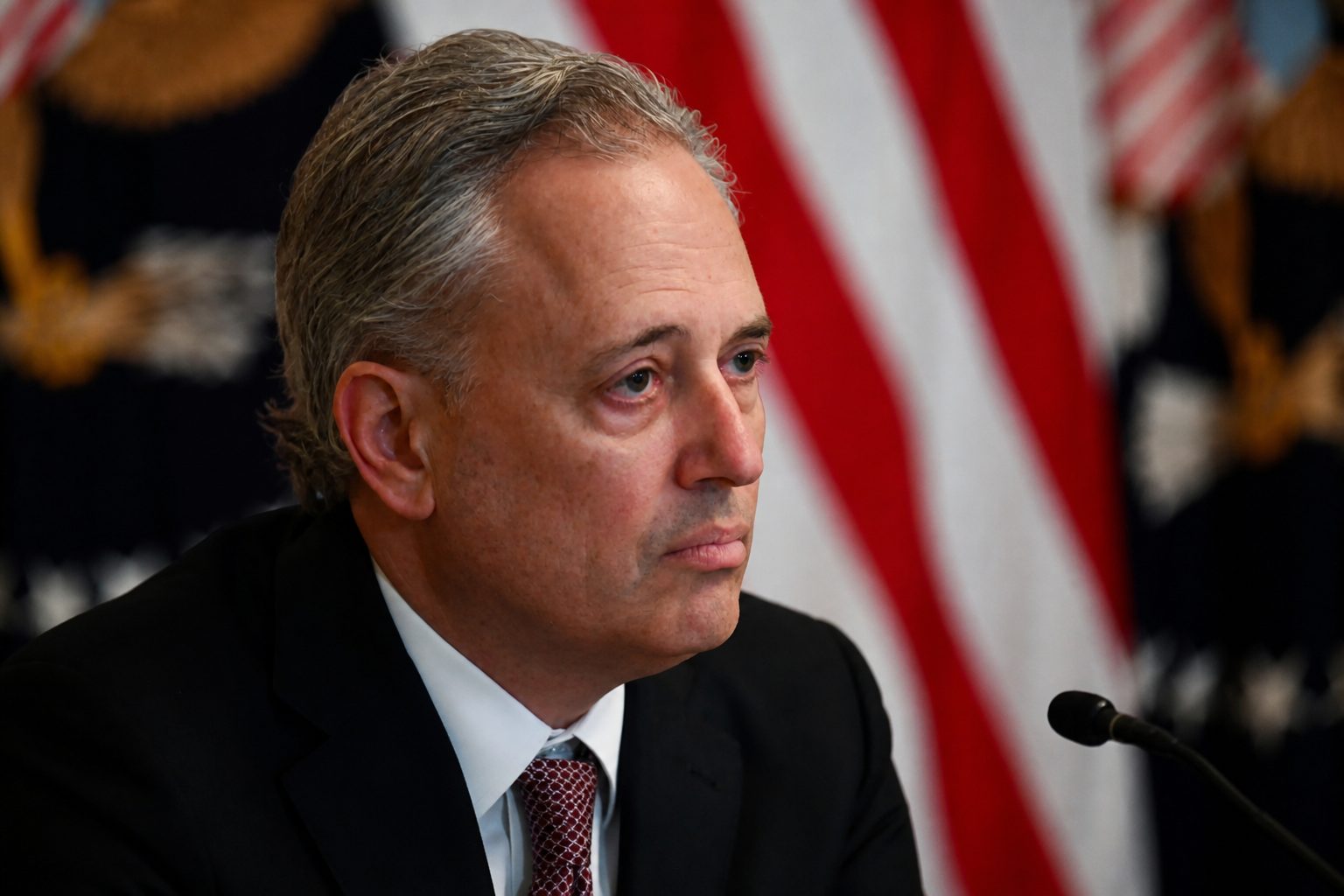
A surge in artificial-intelligence infrastructure spending is becoming one of the main props under the U.S. economy, with former White House AI and crypto adviser David Sacks arguing that slowing the build-out would now hit growth itself.
Sacks wrote on X that AI accounted for 75% of U.S. GDP growth in the first quarter and said the trend was likely to continue. “Stopping progress in AI would be equivalent to halting the U.S. economy,” he said, according to Fortune. ( [4])
That matters now because the latest U.S. growth report showed a narrow kind of strength. The Bureau of Economic Analysis said real gross domestic product rose 2.0% at an annual rate in the first quarter, up from 0.5% in the fourth quarter, with investment, exports, consumer spending and government spending all contributing. But the agency also said consumer spending decelerated. ( [5])
Markets are treating the AI build-out as both a cushion and a risk. U.S. stock futures were higher early Tuesday, helped by a dip in oil, but Reuters reported investors remained caught between strong earnings and the threat that renewed U.S.-Iran fighting could disrupt the Strait of Hormuz. BlackRock Investment Institute analysts led by Wei Li warned that “even U.S. equities won’t be insulated” if the key shipping route does not reopen. ( [6])
Morgan Stanley has lifted its capital expenditure forecast for the five biggest U.S. hyperscalers — large cloud-computing companies — to more than $800 billion this year and $1.1 trillion in 2027, Reuters’ markets column said. CryptoBriefing, citing Morgan Stanley, put the 2026 figure at $805 billion for Amazon, Alphabet, Meta, Microsoft and Oracle. Capital expenditure, or capex, means spending on long-lived assets such as data centers, servers and chips. ( [7])
The competitive pressure is already showing up in deals. Meta Platforms is working with Morgan Stanley and JPMorgan Chase on a roughly $13 billion financing package for an El Paso, Texas, data center, a source told Reuters; Meta, Amazon, Alphabet and Microsoft are projected to spend more than $630 billion on AI infrastructure this year. ( [8])
Treasury’s own read of the economy points in the same direction. It said business fixed investment made the largest contribution to first-quarter growth, adding 1.4 percentage points, while real business equipment investment rose at a 17.2% rate and data-center investment jumped more than 22% annualized. ( [9])
The argument has moved beyond Silicon Valley. The New York Post’s Charles Gasparino framed the weekend debate as whether AI spending was helping keep the U.S. economy from “falling off a cliff,” reflecting a broader Wall Street concern that growth is becoming dependent on a small group of technology companies. ( [10])
There is a but. Morgan Stanley’s Lisa Shalett wrote in March that investors were already questioning how the AI build-out would be funded and when the benefits would show up in earnings and profits, not just expectations. That is the weak point in the story: if demand, margins or financing conditions shift, today’s capex boom could slow quickly. ( [11])
Energy is another pressure point. Reuters reported Brent crude was still above $113 a barrel Tuesday after U.S.-Iran exchanges in the Gulf, and said the Strait of Hormuz typically carries oil and gas supply equal to about 20% of global demand each day. Tim Waterer, chief market analyst at KCM Trade, said one escorted ship showed limited safe passage was possible, “rather than a full reopening.” ( [12])
The International Monetary Fund is also warning that the war could overpower the AI cushion if it drags on. IMF Managing Director Kristalina Georgieva said the global economy faced a “much worse outcome” if the Middle East conflict continued into 2027 and oil prices reached around $125 a barrel. ( [13])
For now, AI spending is giving the U.S. economy a bridge over softer consumer demand and an oil shock. The next test is whether Big Tech’s data-center race turns into broad productivity gains, or remains a costly build-out concentrated in a handful of companies.
References
1. fortune.com, 2. www.bea.gov, 3. www.reuters.com, 4. fortune.com, 5. www.bea.gov, 6. www.reuters.com, 7. www.reuters.com, 8. www.reuters.com, 9. home.treasury.gov, 10. nypost.com, 11. www.morganstanley.com, 12. www.reuters.com, 13. www.reuters.com