Cullman, Alabama, May 10, 2026, 08:06 CDT
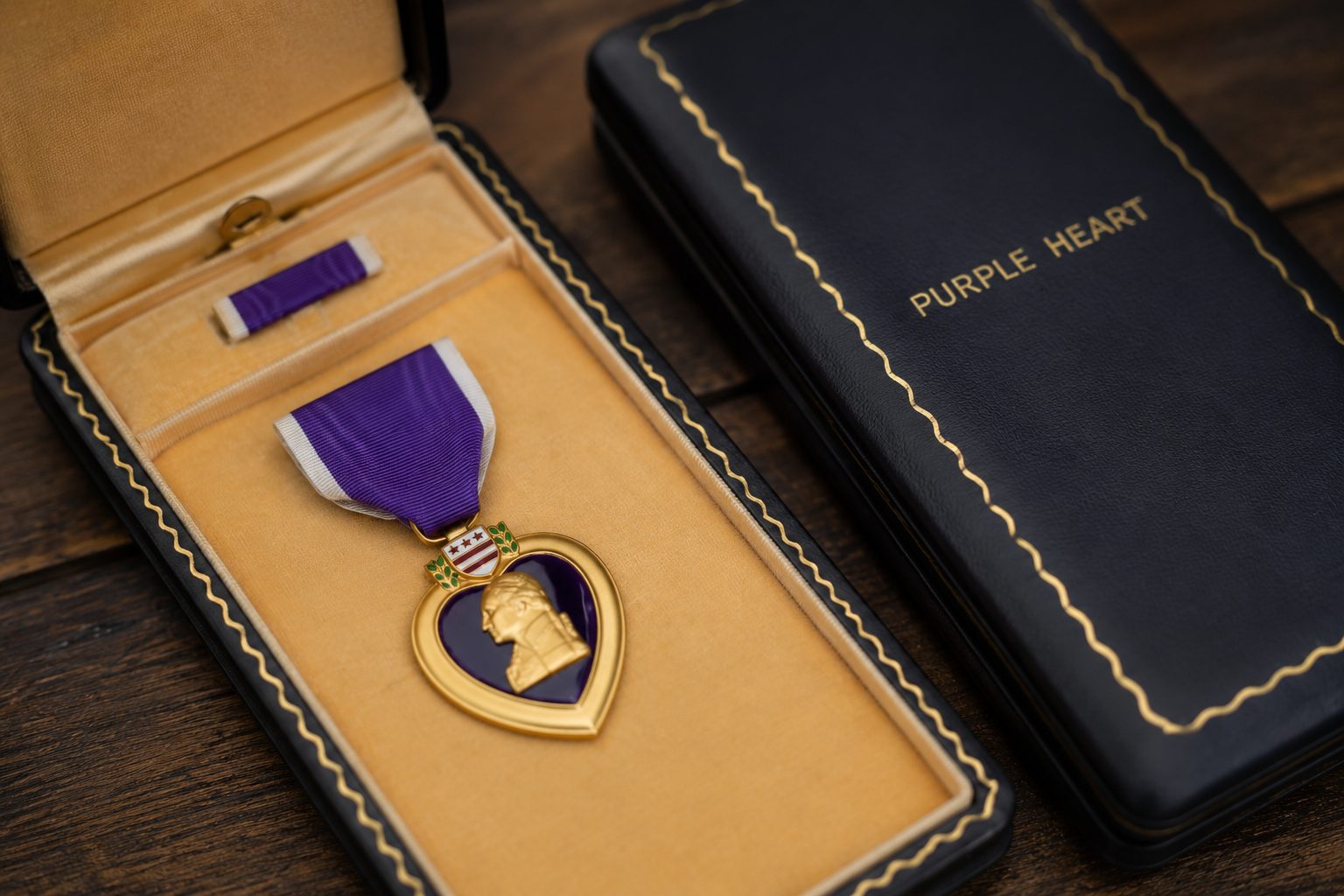
In Cullman, Alabama, a Vietnam veteran has finally received his Purple Heart, almost 60 years after his combat injury. The recognition comes just as renewed scrutiny surrounds another Purple Heart honoree facing U.S. immigration action.
After years of pushing for it, Richard “Rick” L. Leigeber—this year’s Cullman Veterans Hall of Fame honoree—finally got his medal. U.S. Rep. Robert Aderholt handed it over at Cullman VFW Post 2214. The episode underscores just how much recognition for battlefield injuries can hinge on paperwork, persistence and timing, even for veterans already recognized in their own communities. The Cullman Tribune
The timing comes as CNN spotlighted Sae Joon Park, a Purple Heart honoree and noncitizen Army vet who left for South Korea after U.S. immigration officials warned him about possible detention and deportation. His story has kept the heat on federal agencies’ treatment of noncitizen veterans.
Leigeber described the award to The Cullman Tribune as “a long time coming,” recalling that his first application dated back about 25 years. He eventually turned to Aderholt’s office for assistance. In a post from April 14, Aderholt noted, as reported by the paper, that Leigeber received the medal for his Vietnam injuries but had “never gotten this token” of national gratitude. The Cullman Tribune
Leigeber’s time in the U.S. Army spanned from 1967 to 1969, when he was with Company A, 4th Battalion, 23rd Mechanized Infantry Brigade, part of the 25th Infantry Division—Tropic Lightning. The Tribune, citing prior Hall of Fame reporting, noted his Vietnam tour included service in the Cu Chi Valley during the Tet Offensive, 1968 through 1969.
The Purple Heart goes to U.S. service members who are wounded or killed in enemy action or similar hostile incidents. According to Air Force Personnel Center guidance, a qualifying wound typically must need treatment and have a direct link to enemy or hostile activity—a requirement that often leaves older cases hinging on paperwork, witness statements, and a formal review. Air Force’s Personnel Center > Display “>a…
Leigeber told the Tribune that getting the medal during his lifetime made a difference. “I was grateful,” he said, and emphasized he wanted it “on my record.” He noted that as he’s gotten older, the memories of what earned him the Purple Heart have come back more sharply, especially after years spent keeping occupied. The Cullman Tribune
Park’s situation isn’t the same, but it circles back to the question of how “service” gets defined years down the line. NPR noted last year that Park, originally from South Korea, arrived in the U.S. at age 7, later joined the Army, and suffered wounds in Panama back in 1989. Before his departure, he told NPR he couldn’t believe this was happening “in America,” the country he said he had fought for. Wunc
Speaking to CNN after his departure, Park explained his decision to self-deport stemmed from concerns over possible detention and a desire to spare his family a lengthy legal ordeal. His lawyer, Danicole Ramos, told CNN she was reviewing earlier convictions from Queens County that played a role in the removal order, noting that changes to those cases might open the door to revisiting his immigration proceedings.
The government is standing by its decision. Citing an “extensive criminal history,” Homeland Security Assistant Secretary Tricia McLaughlin told CBS Los Angeles that a judge ordered Park removed back in 2010, and since he had no legal grounds to stay in the U.S., he was permitted to leave for Korea on his own. CBS News
Park faces the possibility that legal relief won’t materialize—or could arrive too late to matter. According to ABC News, then-Homeland Security Secretary Kristi Noem promised in December to review Park’s case after Rep. Seth Magaziner pressed her during a House hearing. But as CBS reported later, Park and his lawyer were still waiting for any response from the department.
The controversy isn’t limited to a single veteran. Back in November, The Washington Post highlighted José Barco, who served in the Army and was awarded a Purple Heart, but was deported after finishing his prison term. Advocates pointed to his situation as showing breakdowns in both the military and immigration systems.
Leigeber saw the Alabama ceremony as a way to finally close an old account, right out in the open. Park, though, along with other veterans without citizenship, faces a different question: it isn’t really about the medal. It’s whether fighting for the U.S. should alter how the country judges deportation, criminal records, and years spent building a life here.