New York, May 8, 2026, 1:05 PM EDT
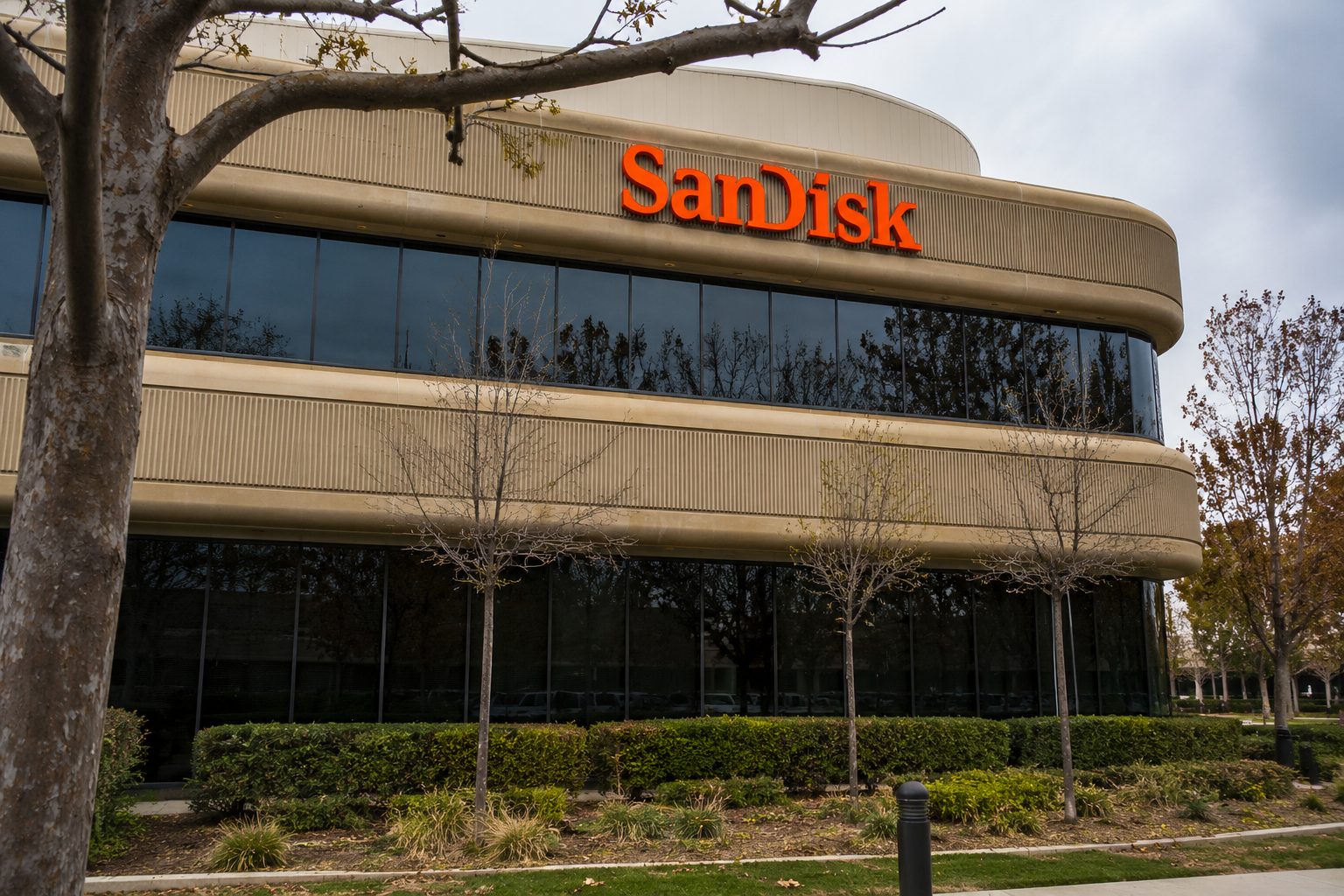
SanDisk surged roughly 12% Friday, hitting a new intraday peak of $1,528 after shaking off Thursday’s dip. Investors poured back into the AI memory name. Shares last changed hands at $1,498.52, up $158.56 for the day.
SanDisk’s role has shifted: it’s now seen as a high-beta play on the ongoing NAND flash memory shortage—the chips that sit inside phones, solid-state drives, and, more recently, inside the data centers powering AI. Demand is coming from AI applications managing massive files, codebases, and other heavyweight data, pushing what used to be a boom-bust storage business into the spotlight as a test of whether memory makers can build more predictable margins.
SanDisk shares bounced back Friday, clawing back some ground after Thursday’s slide. That drop was sparked by a Bernstein note flagging that soaring memory prices were beginning to squeeze spot demand. Still, Bernstein kept a buy rating on SanDisk, according to Motley Fool, highlighting NAND prices up 65% to 70% and DRAM prices jumping 57% in April versus the first quarter average.
SanDisk’s latest results handed bulls a lot to chew on. Revenue for the fiscal third quarter hit $5.95 billion—97% higher than last quarter, and that’s a leap of 251% year over year. GAAP net income landed at $3.62 billion. Over in the data-center segment, revenue surged 233% sequentially. Looking ahead, the company’s guidance for fiscal Q4 points to revenue between $7.75 billion and $8.25 billion.
Chief Executive David Goeckeler described the quarter as a “fundamental inflection point,” pointing to SanDisk’s pivot into “multi-year customer engagements backed by firm financial commitments.” He also highlighted the zero-debt balance sheet, steady cash generation, and a fresh share repurchase authorization. Sandisk Corporation
Long-term contracts are now at the heart of things. SanDisk has revealed five customer agreements so far; three of those were inked in the fiscal third quarter and point to roughly $42 billion in minimum contractual revenue. Altogether, those five deals come with more than $11 billion in financial guarantees, according to company filings cited by Benzinga.
Analyst Vijay Rakesh at Mizuho wasted no time bumping his SanDisk target to $1,625—up from $1,220—while sticking with his Outperform call. He pointed to AI inference and “agentic AI” as the big forces stoking NAND demand. The latter refers to AI that handles multi-step jobs with minimal human input. TipRanks
Evercore ISI’s Amit Daryanani flagged firmer fundamentals, rising commitments from hyperscalers, and the idea that SanDisk’s latest contracts could help smooth out the usual volatility in memory chip cycles, Benzinga reported. Investors, as a result, have been less worried that today’s steep prices will draw in extra supply down the line.
Peers rallied too. Micron Technology jumped close to 12% on Friday. Western Digital—SanDisk’s old parent—added about 2%. The move wasn’t isolated to a single company, but the action clearly stayed centered on memory stocks seen as key to AI infrastructure demand.
There’s a risk the shortage could end up backfiring. Bernstein flagged that original equipment makers and module houses are already pulling back on buying, pushed away by prices that have surged sharply. If that attitude gains traction, price hikes may start to stall in the September quarter, putting SanDisk’s margin story under pressure.
The consumer electronics angle isn’t minor here. Arm CEO Rene Haas flagged a potential stall in smartphone volume growth this year—maybe even a small drop. Figures from Counterpoint Research and IDC, as noted by Investopedia, showed that first-quarter smartphone shipments actually slipped, with higher memory costs pushing up prices and complicating supply.
Right now, what’s grabbing investors’ attention is SanDisk’s contract lineup, its ability to set prices, and that hefty buyback. According to a filing, the board signed off on a $6 billion share repurchase plan. SanDisk noted the actual pace would hinge on market conditions—and left the door open to pausing or even ending the buyback at any point.